

By Hallie Carpenter, EdS, NCSP, and Dr. J. Stuart Ablon
As schools increasingly recognize the importance of emotional regulation and social-emotional learning (SEL), educators are turning to innovative approaches to help students thrive. One such approach is Collaborative Problem-Solving® (CPS), a neurobiologically grounded and trauma-informed method that helps students develop critical skills in emotional regulation, problem-solving, and executive functioning. By focusing on building skills rather than punishing behavior, CPS promotes a more equitable school environment and better prepares students to navigate both academic and social challenges.
Collaborative Problem Solving is an approach that emphasizes understanding the root causes of student behavior rather than simply addressing the behavior itself. It is based on the understanding that "students do well if they can," meaning that students who struggle with meeting common expectations at school often lack the skills to succeed rather than the desire to do so (Ablon, 2019). CPS provides a structured process to help educators identify skills to develop and work collaboratively with students to develop the necessary skills for success.
The CPS framework includes a structured assessment process designed to help adults understand student challenges and needs, and design plans to address those needs. Using the Collaborative Problem Solving Assessment and Planning Tool (CPS-APT), school teams identify the specific situations in which challenging or undesired behaviors occur and the Thinking Skills that make those situations challenging. This process encourages educators to view behavioral struggles not as intentional misbehavior but as a sign of skill gaps, fostering a more compassionate and understanding response to students.
Once these challenges are identified, educators can strategically choose one of three intervention plans that work to accomplish different goals:
Plan B is the most effective at building skills and strengthening relationships, as it focuses on problem-solving together with the student while addressing their emotional needs. This collaborative approach encourages students to engage in the problem-solving process and helps them practice essential skills like impulse control, emotional regulation, and cognitive flexibility.
The Plan B process utilizes three key ingredients:
Through these three. steps, educators identify where students get "stuck" in problem-solving, revealing which skills need further development. Over time, this collaborative process provides natural, relational practice for students, building the executive functioning skills they need to succeed.
CPS recognizes the importance of neuroplasticity—the brain’s ability to form and strengthen neural connections. When students struggle with emotional regulation or problem-solving, it is often because the relevant neural pathways have not yet been sufficiently developed. Traditional methods like direct instruction or role-playing can sometimes miss the mark because they fail to engage the brain in the way that real-life situations do.
For effective learning to occur, skills must be practiced in ways that closely mirror the challenges students face on a regular basis. This involves practicing strategies in real-life, emotionally charged situations rather than in artificial or low-stakes scenarios. The key is to use situations with “good stress” that provide just enough pressure to engage the brain but not so much that the student becomes overwhelmed.
The beauty of the Plan B problem-solving process is that it builds skills in a real-world, relational context, which helps students transfer these skills to other situations. Repeated practice ensures that the strategies learned through real-life problem-solving with a trusted adult are not only more effective but also more likely to be applied successfully in future situations. Moreover, CPS emphasizes the importance of practicing skills in small doses spread throughout the day rather than in long, intense training sessions. This approach helps the brain retain and integrate new skills more effectively by allowing for repetition while preventing burnout.
Research has shown that children who participate in CPS programs demonstrate improvements in emotional regulation, impulse control, and cognitive flexibility (Pollastri et al., 2013). By using CPS, educators are not just addressing behavioral problems; they are helping students develop the fundamental skills they need to navigate life challenges, both inside and outside the classroom.

While CPS is often practiced with individual students, it can also be implemented across entire school systems to build a culture that values skill development and positive relationships. CPS has been shown to reduce teacher stress, decrease concerning behaviors, and lower the frequency of office referrals and restrictive disciplinary practices like time-outs and restraints (Schaubman et al., 2011; Stetson & Plog, 2016). Additionally, it leads to improved student attendance and enhanced feelings of emotional safety within the school environment.
Collaborative Problem Solving can be effectively integrated into a Multi-Tiered System of Support (MTSS), a framework designed to meet students’ varying needs. CPS can be applied at all three tiers of MTSS:
When implemented across a school, CPS can operationalize social-emotional learning. The three ingredients of the CPS problem-solving process—Empathize, Share, and Collaborate—help students develop critical Social Emotional skills, including self-awareness, self-regulation, social awareness, relationship skills, and responsible decision-making. These skills are practiced naturally in the classroom and, when shared with parents and caregivers, they can extend to the home, creating a unified approach to student development.
CPS can also be combined with other SEL programs to provide students with opportunities to learn and practice skills in direct and indirect ways. For example, RULER is an evidence-based approach developed at the Yale Center for Emotional Intelligence that teaches emotional intelligence and fosters positive school climates. RULER’s focus on emotional vocabulary helps educators better understand students' emotions during problem-solving discussions, while CPS strengthens RULER by offering a structured problem-solving framework that supports emotion regulation and perspective-taking. These two complementary approaches, implemented together, are an example of a comprehensive approach to Social Emotional Learning that is grounded in positive relationships and skill development practice.
CPS is particularly effective in creating trauma-sensitive schools. Traditional punitive discipline often exacerbates student stress, especially for those with trauma histories. CPS provides a way to respond to challenging behaviors without escalating stress, thus avoiding re-traumatization. It helps maintain authority while reducing power differentials between students and teachers, which is crucial for students with trauma backgrounds. By practicing CPS, educators and school leaders can support students in managing their emotional responses to authority figures and create a safer, more supportive learning environment.
CPS promotes self-reflection and awareness, encouraging educators to examine their own biases and assumptions about student behavior. This approach helps disrupt the disproportionate use of punitive discipline, particularly for students of color and those with disabilities, by focusing on skill development rather than behavioral control. By embracing the belief that behavior is a matter of skill, not will, CPS fosters a more equitable and compassionate approach to discipline.
Educators often express concerns about the time required to implement CPS or whether it holds students accountable for their actions. However, the average Plan B conversation only takes a few minutes and can be seamlessly integrated into the school day. Additionally, Plan B conversations can occur with groups of students during morning meetings, advisory time, or social-emotional learning blocks. This group format ensures that many students benefit from both skill instruction and practice simultaneously. This proactive approach helps reduce disruptive behavior over time. Additionally, CPS holds students accountable in a more meaningful way by engaging them in restorative problem-solving rather than simply issuing a consequence.
Educators can begin using CPS immediately by adopting the mindset that “students do well if they can.” By actively listening to students and approaching challenges with curiosity, educators can improve relationships and create a more collaborative, proactive approach to addressing student needs. This foundational shift can lead to more effective problem-solving and better outcomes for students.
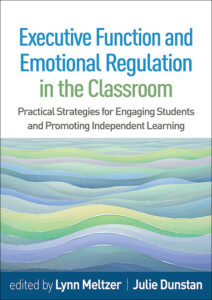
Executive Function and Emotional Regulation in the Classroom: Practical Strategies for Engaging Students and Promoting Independent Learning
by Lynn Meltzer (Editor), Julie Dunstan (Editor)
This book presents research-based strategies for helping students thrive academically, socially, and emotionally by harnessing the dynamic interplay of executive function (EF) and emotional regulation.
More on Collaborative Problem Solving can be found in the chapter Emotional Regulation for All Students: Using Collaborative Problem-Solving to Build Social-Emotional Skills, by Dr. J. Stuart Ablon and Hallie Carpenter.
| Cookie | Duration | Description |
|---|---|---|
| __cf_bm | 1 hour | This cookie, set by Cloudflare, is used to support Cloudflare Bot Management. |
| __hssc | 1 hour | HubSpot sets this cookie to keep track of sessions and to determine if HubSpot should increment the session number and timestamps in the __hstc cookie. |
| __hssrc | session | This cookie is set by Hubspot whenever it changes the session cookie. The __hssrc cookie set to 1 indicates that the user has restarted the browser, and if the cookie does not exist, it is assumed to be a new session. |
| cookielawinfo-checkbox-advertisement | 1 year | Set by the GDPR Cookie Consent plugin, this cookie records the user consent for the cookies in the "Advertisement" category. |
| cookielawinfo-checkbox-analytics | 11 months | This cookie is set by GDPR Cookie Consent plugin. The cookie is used to store the user consent for the cookies in the category "Analytics". |
| cookielawinfo-checkbox-functional | 11 months | The cookie is set by GDPR cookie consent to record the user consent for the cookies in the category "Functional". |
| cookielawinfo-checkbox-necessary | 11 months | This cookie is set by GDPR Cookie Consent plugin. The cookies is used to store the user consent for the cookies in the category "Necessary". |
| cookielawinfo-checkbox-others | 11 months | This cookie is set by GDPR Cookie Consent plugin. The cookie is used to store the user consent for the cookies in the category "Other. |
| cookielawinfo-checkbox-performance | 11 months | This cookie is set by GDPR Cookie Consent plugin. The cookie is used to store the user consent for the cookies in the category "Performance". |
| CookieLawInfoConsent | 1 year | CookieYes sets this cookie to record the default button state of the corresponding category and the status of CCPA. It works only in coordination with the primary cookie. |
| viewed_cookie_policy | 11 months | The cookie is set by the GDPR Cookie Consent plugin and is used to store whether or not user has consented to the use of cookies. It does not store any personal data. |
| Cookie | Duration | Description |
|---|---|---|
| li_gc | 6 months | Linkedin set this cookie for storing visitor's consent regarding using cookies for non-essential purposes. |
| lidc | 1 day | LinkedIn sets the lidc cookie to facilitate data center selection. |
| UserMatchHistory | 1 month | LinkedIn sets this cookie for LinkedIn Ads ID syncing. |
| Cookie | Duration | Description |
|---|---|---|
| __hstc | 6 months | Hubspot set this main cookie for tracking visitors. It contains the domain, initial timestamp (first visit), last timestamp (last visit), current timestamp (this visit), and session number (increments for each subsequent session). |
| _ga | 1 year 1 month 4 days | Google Analytics sets this cookie to calculate visitor, session and campaign data and track site usage for the site's analytics report. The cookie stores information anonymously and assigns a randomly generated number to recognise unique visitors. |
| _ga_* | 1 year 1 month 4 days | Google Analytics sets this cookie to store and count page views. |
| _gat_gtag_UA_* | 1 minute | Google Analytics sets this cookie to store a unique user ID. |
| _gid | 1 day | Google Analytics sets this cookie to store information on how visitors use a website while also creating an analytics report of the website's performance. Some of the collected data includes the number of visitors, their source, and the pages they visit anonymously. |
| AnalyticsSyncHistory | 1 month | Linkedin set this cookie to store information about the time a sync took place with the lms_analytics cookie. |
| CONSENT | 2 years | YouTube sets this cookie via embedded YouTube videos and registers anonymous statistical data. |
| hubspotutk | 6 months | HubSpot sets this cookie to keep track of the visitors to the website. This cookie is passed to HubSpot on form submission and used when deduplicating contacts. |
| vuid | 1 year 1 month 4 days | Vimeo installs this cookie to collect tracking information by setting a unique ID to embed videos on the website. |
| Cookie | Duration | Description |
|---|---|---|
| bcookie | 1 year | LinkedIn sets this cookie from LinkedIn share buttons and ad tags to recognize browser IDs. |
| bscookie | 1 year | LinkedIn sets this cookie to store performed actions on the website. |
| li_sugr | 3 months | LinkedIn sets this cookie to collect user behaviour data to optimise the website and make advertisements on the website more relevant. |
| NID | 6 months | Google sets the cookie for advertising purposes; to limit the number of times the user sees an ad, to unwanted mute ads, and to measure the effectiveness of ads. |
| test_cookie | 15 minutes | doubleclick.net sets this cookie to determine if the user's browser supports cookies. |
| VISITOR_INFO1_LIVE | 6 months | YouTube sets this cookie to measure bandwidth, determining whether the user gets the new or old player interface. |
| YSC | session | Youtube sets this cookie to track the views of embedded videos on Youtube pages. |
| yt-remote-connected-devices | never | YouTube sets this cookie to store the user's video preferences using embedded YouTube videos. |
| yt-remote-device-id | never | YouTube sets this cookie to store the user's video preferences using embedded YouTube videos. |
| yt.innertube::nextId | never | YouTube sets this cookie to register a unique ID to store data on what videos from YouTube the user has seen. |
| yt.innertube::requests | never | YouTube sets this cookie to register a unique ID to store data on what videos from YouTube the user has seen. |
| Cookie | Duration | Description |
|---|---|---|
| __Secure-YEC | 1 year 1 month | Description is currently not available. |
| _cfuvid | session | Description is currently not available. |
| _pk_id.d014234b-506e-4c9f-8f74-9ecfcde5874f.838e | 1 hour | Description is currently not available. |
| _pk_ses.d014234b-506e-4c9f-8f74-9ecfcde5874f.838e | 1 hour | Description is currently not available. |
| cf_clearance | 1 year | Description is currently not available. |
| ppms_privacy_d014234b-506e-4c9f-8f74-9ecfcde5874f | 1 year | Description is currently not available. |
| VISITOR_PRIVACY_METADATA | 6 months | Description is currently not available. |